
MONDAYS
TUITION NIGHT
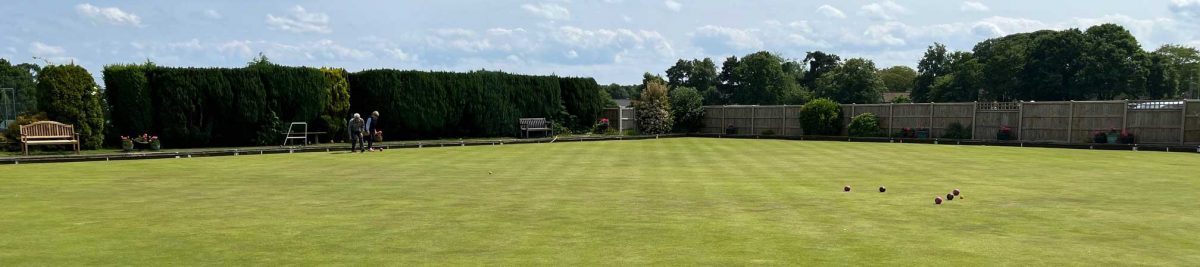
Every Monday (April to September) from 6:30pm is Tuition Night and anyone can come along and give bowling a try for FREE. Experienced Members and our Club Coach will be on hand to welcome you to the green and help you learn the ropes – from green etiquette and rules to playing technique.
We have everything you need including various sizes/weights of bowls and even shoes for you to try.
Don’t know the terminology? Don’t worry!
Apart from ‘Well you bowled!‘, below are some of the most popular words and phrases you’ll hear around the green…
A bowl that has come to rest beyond the jack or the main body of bowls in the head.
When, for the right-handed player, the bowl is delivered so that the curve of the bowl is from left to right as it moves towards its objective.
The same meaning as ‘Don’t be short’, only more emphatic!
That which is inbuilt into the bowl and causes the bowl to travel in a curve.
A bowl delivered with the correct pace to stop short of the objective, in the hope that it will prevent an opponent being able to play a certain shot.
Any bowl which contributes to the score at the completion of the end.
An instruction to a bowler to bowl in such a way that the bowl finishes between the jack and the bowl indicated.
Either a bowl which comes to rest in the ditch or is knocked into the ditch and is not a toucher, or a bowl that comes to rest outside the confines of the rink, either in its course or by being knocked there.
An end which is considered not to have been played and so no score is recorded. It can happen as a result of the jack being driven out of the confines of the playing area.
The depression that surrounds the green. Its edge marks the boundary of the playing surface. Measurements of the ditch need to conform to the laws of the game.
The sequence of play, beginning with the placing of the mat and ending with the coming to rest of the last player’s bowl, after all have delivered their bowls in the same direction.
Usually a dry and closely cut surface which offers little resistance to the progress of the bowl.
A shot where the bowl is delivered at a very fast pace.
A shot excruciatingly executed, yet sublimely successful – do at least say sorry!
This should be the natural movement forward of the delivery arm following the line or path of the bowl.
When the rear foot is not completely on or above the mat at the moment of delivery. The player could incur a penalty.
When, for the right-handed player, the bowl is delivered so that the curve of the bowl is from right to left as it travels towards its objective.
The total playing surface, the measurements of which are laid down in the rules.
The jack and as many bowls as have been played at any stage of any end. Bowls in the head may be on the rink or in the ditch.
Where a bowl has been delivered with too much pace and will end beyond its objective.
The round white or yellow ball towards which play is directed. The size of the jack must conform to the rules.
A bowl which, when it comes to rest, is at the same distance from the mat as is the jack.
The player who lays the mat, rolls the jack, and delivers the first bowl in an end. He may sometimes toss the coin at the beginning of the game to determine which team has the right to start play.
Any bowl that comes to rest within the confines of the rink and is acceptable under the conditions laid down by the laws of the game, or any toucher in the ditch.
A jack that is the greatest distance allowed from the front edge of the mat, or is close to this limit.
To mark a toucher with chalk
A person who undertakes to see that a game of singles is played according to the rules. He marks all touchers, centres the jack, measures, and keeps the score. During the playing of an end, it could be wiser for the marker not to talk to the players unless asked a direct question.
The mat from which a bowler must make his delivery (the size is laid down in the rules).
A device used to determine which bowl is nearest the jack.
Where a player has not allowed enough green or land. But this shot can sometimes be played intentionally.
An instruction for a bowl to be delivered with enough pace to clear any obstruction in the way of bowls that are between the player and the jack.
The amount of force with which the bowl is delivered to execute a particular shot.
Two players against two, each using four bowls for a period of twenty-one ends. Their position in order of play: lead and then skip.
This may be awarded by the umpire when, for example, a player has been foot faulted in delivering his bowl. The umpire could also declare the bowl to be dead.
When a player bowls his bowl to strike other bowls which could be in line, in order to gain his objective.
An instruction to a bowler to play his bowl onto a bowl belonging to his side, so that the bowl that was stationary is pushed closer to the objective.
The bowling of a bowl with sufficient pace or weight that it pushes a bowl from its position, so that the position is taken by the last bowl delivered.
An instruction to a player to bring his bowl to rest against another bowl.
The rectangular area of the green on which play takes place.
A group of four players against four, each bowling two bowls for a period of twenty-one ends. Their positions in order of play: lead, second, third and skip.
A bowl that, during its running course, comes into light contact with another, which can affect the line of direction.
The bowl which finishes closest to the jack, other than the shot bowl.
The player who plays after the lead in a game of fours or triples. He marks the score-card and keeps the score-board up to date.
A bowl that has not been delivered with sufficient pace to reach its objective.
A jack that is at the shortest distance allowed from the front edge of the mat, or close to this limit.
The bowl that finishes nearest to the jack at any stage of play.
That point on the green where the bowl begins to curve inwards towards its objective.
One player against one player, each using four bowls.
The captain of a game of fours, triples or pairs. He is last to bowl and is responsible for dictating the tactics of the game.
Where the surface offers some greater resistance to the progress of the bowl.
An instruction to the bowler to bowl a bowl of sufficient pace that it forces apart other bowls, and has enough momentum to carry on beyond that point.
Normally a green ‘string’ drawn tightly along the green to define the boundaries of the rink.
An instruction to a bowler to bowl with sufficient pace to push an opponent’s bowl away.
On forehand or backhand, the bowler bowls to the shoulder so that his bowl will curve and come to rest as near as possible to the point he desires.
A position in a game of fours. He will deputize for his skip in certain circumstances, and could be responsible for measuring.
When the nearest bowls of both sides are exactly the same distance from the jack at the completion of the end (e.g. when both have a bowl actually touching the jack). Neither side scores but it is a completed end and is entered on the scorecard.
A bowl which, during its course, has touched the jack, or a bowl which has come to rest and falls over to touch the jack, before the next bowl is delivered, or a bowl that is the last to be delivered and falls and touches the jack within the period of half a minute. All the above will be marked with a chalk mark.
A toucher which has fallen into the ditch. This is a ‘live’ bowl, unless it has come to rest outside the confines of the rink.
To play a bowl in order to move the jack to another position on the rink.
Three players against three, each using three bowls for a playing period of 18 ends. Their positions in order of play: lead, second and skip
The person with total overall authority during a game to enforce the laws of the game.
A bowl that is travelling at a certain pace which comes into an angled contact with another bowl, thus causing the course of the moving bowl to be altered.
Where the player has allowed too much green or land for his bowl.